Fungal Conks on a Tree Trunk — How Worried Should You Be?
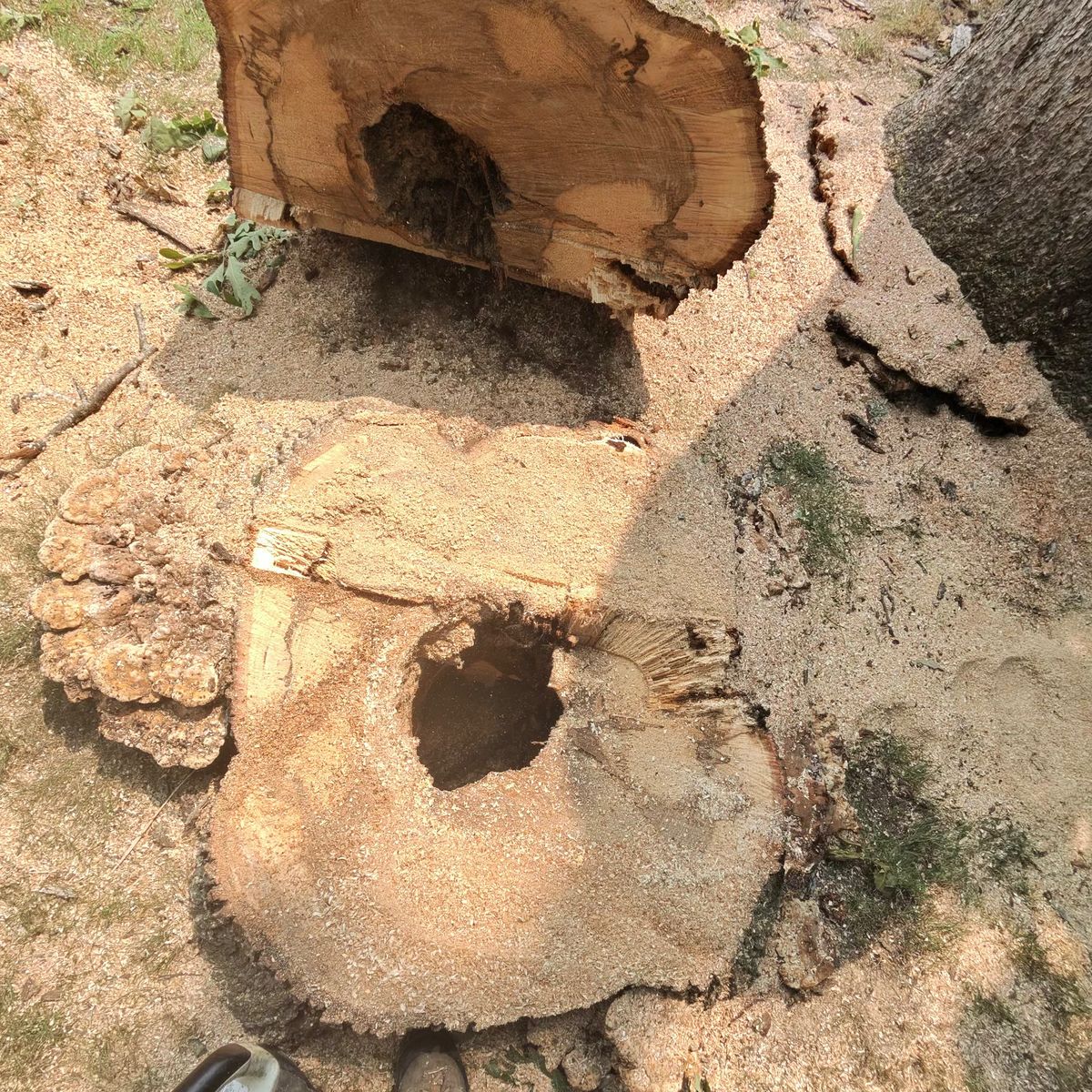
Here’s what actually happens when a bracket fungus shows up on a tree trunk: it means the fungus has already won. The conk — that shelf-shaped growth sticking out of the bark — is not the disease. It is the fruiting body. The fungus itself has been inside the tree for years, breaking down the wood structure long before anything became visible on the outside. By the time a homeowner notices the conk, the internal damage is advanced.
That does not automatically mean the tree falls tomorrow. But it does mean the structural conversation needs to happen.
What the conk is telling you
A conk on a tree trunk is a wood-decay fungus advertising that it has colonized enough internal wood to reproduce. The USDA Forest Service’s guide to recognizing hazardous defects in trees puts it plainly: the presence of fungal fruiting bodies on a trunk or root flare is one of the highest-priority indicators that a tree has internal decay. The visible conk is the tip. The internal column of decayed wood is the mass underneath.
Different fungi attack different zones:
- Conks at the base or root flare — these are the most dangerous structurally. The base is where all the mechanical load concentrates. A decay column in the lower four feet of the trunk compromises the tree’s ability to stand in wind. Ganoderma (the artist’s conk), Laetiporus (chicken of the woods when on a living tree), and Armillaria (honey mushroom) are common base-and-root attackers in Central PA.
- Conks on the main trunk — a decay column in the mid-trunk reduces the cross-section of sound wood. The tree may tolerate calm conditions but fail in a storm load that sound wood would have handled.
- Conks on branches — a branch with a decay column will eventually fail. The branch drops. If it is a large limb over a structure, a driveway, or a sidewalk, the timeline matters.
The honest answer about how much wood is left
The real problem is that nobody can see inside the trunk from the outside. A conk tells you decay is present. It does not tell you how much sound wood remains. Two trees with identical conks on the outside can have very different amounts of internal decay.
ISA’s hazard-tree assessment protocols and the USDA Forest Service guide both reference the same rule of thumb: a trunk with less than one-third of its cross-section as sound wood is structurally compromised. But measuring that from the outside requires either a resistograph drill, a sonic tomography scan, or an increment bore — tools that a qualified hazard-tree assessment crew brings to the job. A visual inspection can flag the risk. The internal assessment quantifies it.
Species that are most vulnerable in Central PA
Some species resist decay fungi better than others. In practice:
- Highly vulnerable: silver maple, box elder, willow, cottonwood, tree of heaven, white birch. These species compartmentalize decay poorly. Once the fungus is in, it spreads fast.
- Moderately vulnerable: red maple, ash, black cherry, tulip poplar.
- More resistant: white oak, black walnut, honeylocust. These species wall off infections more effectively, but they are not immune. A large enough entry wound or a long enough timeline defeats any compartmentalization.
When to act
The no-way-around-it question: does the tree need to come down?
Not always. But the decision framework is straightforward:
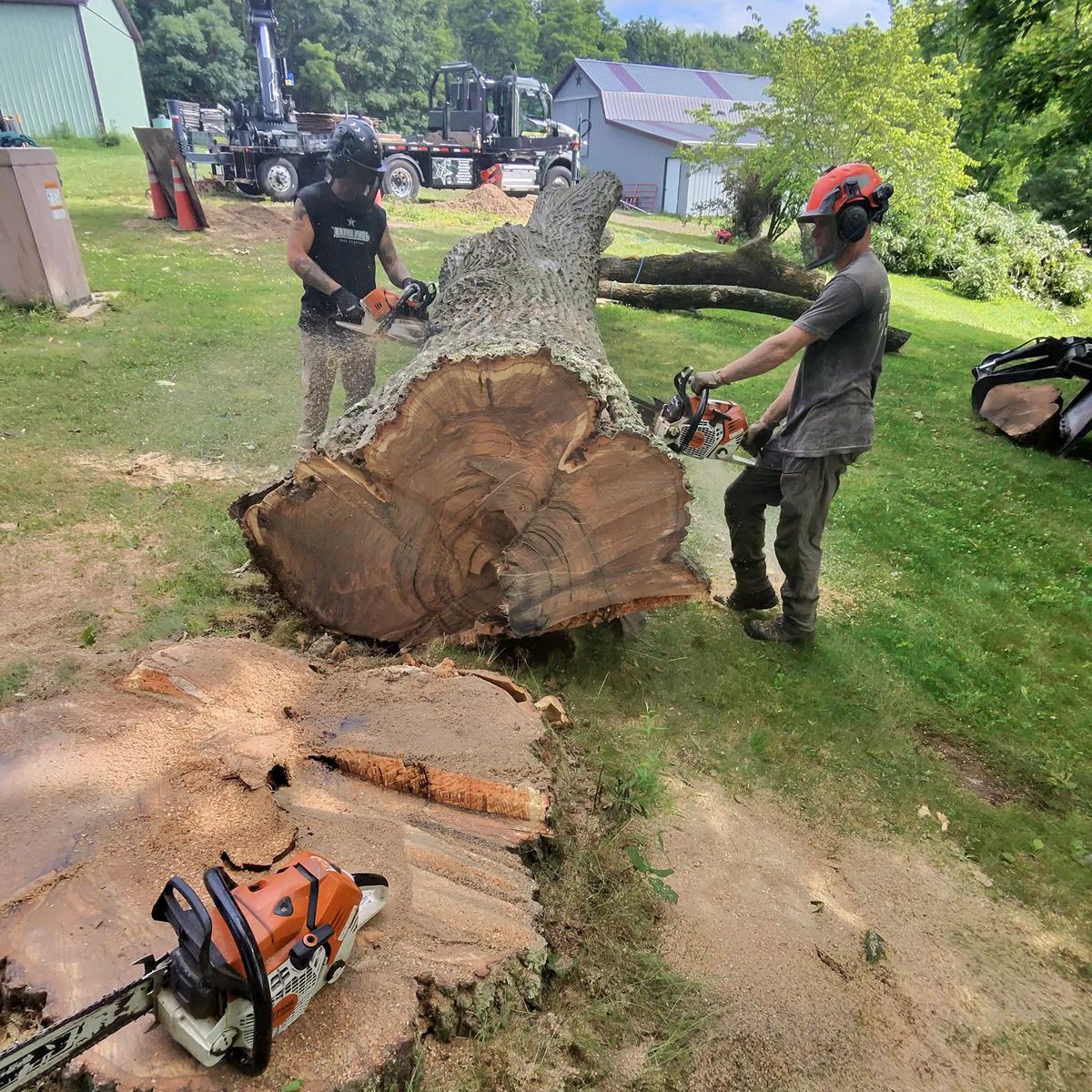
Remove if: the conk is at the base, the tree is within striking distance of a structure or a high-traffic area, and the decay has been present long enough that the trunk sounds hollow when tapped. A hazardous tree removal done on a planned timeline with the right equipment is orders of magnitude safer and cheaper than an emergency removal after a failure.
Monitor if: the conk is on a branch or mid-trunk, the tree is in a low-traffic area, and the overall crown is still full. Annual inspection with photo documentation gives the owner a decision timeline rather than a surprise.
Assess if: uncertain. That is the honest answer for most cases. A single conk on an otherwise healthy-looking tree is not a guaranteed emergency — but it is a guaranteed reason to get a professional look. Here’s what to do: do not ignore it, and do not panic.
What not to do
Do not knock the conk off and assume the problem is solved. The conk is the symptom, not the disease. Removing the fruiting body does nothing to the decay column inside the trunk. A new conk will usually appear within a year or two — and in the meantime, the internal decay has continued spreading.
Do not fill the cavity with concrete or foam. This was common practice decades ago and every current arboricultural standard advises against it. The fill does not restore structural strength, it traps moisture, and it makes future assessment or removal harder.
Do not ignore it. A single conk on an otherwise full-canopied tree may not be an emergency — but it is always worth documenting with a photo, a date, and a note about the location on the trunk. If the conk grows, the crown thins, or new conks appear, the timeline is compressing.
For a fungal-conk assessment on any property in Centre County or the surrounding region, call (814) 553-0303. Arbor Pro’s Tree Service operates under PA Contractor License PA079160.