Tree Hazards
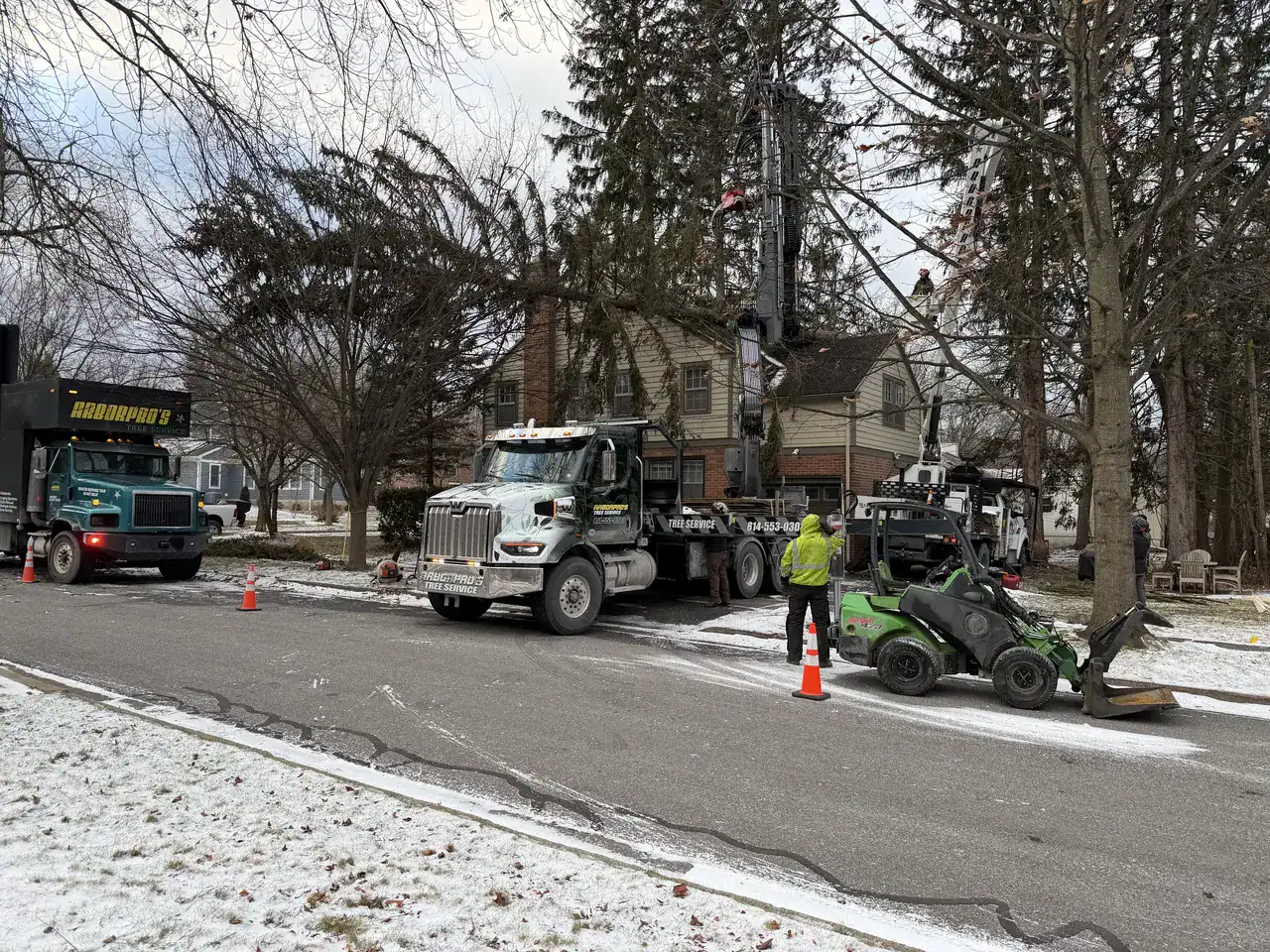
A hazardous tree can go from “it’s been like that for years” to a catastrophe in a single storm. Learning to recognize the warning signs early — and calling a professional before the tree fails — can prevent damage to your home, your vehicles, your utility service, and your family’s safety.
Signs a Tree May Be Hazardous
Not every large or old tree is dangerous, but certain conditions significantly increase the risk of failure. Be alert if you notice any of the following.
Dead or Dying Branches
Dead branches — sometimes called “widowmakers” — can fall without warning in calm weather. If you see large dead limbs in the upper canopy, they need to be removed before they come down on their own. A single dead branch from a mature oak or maple can weigh hundreds of pounds.
Trunk Cracks and Splits
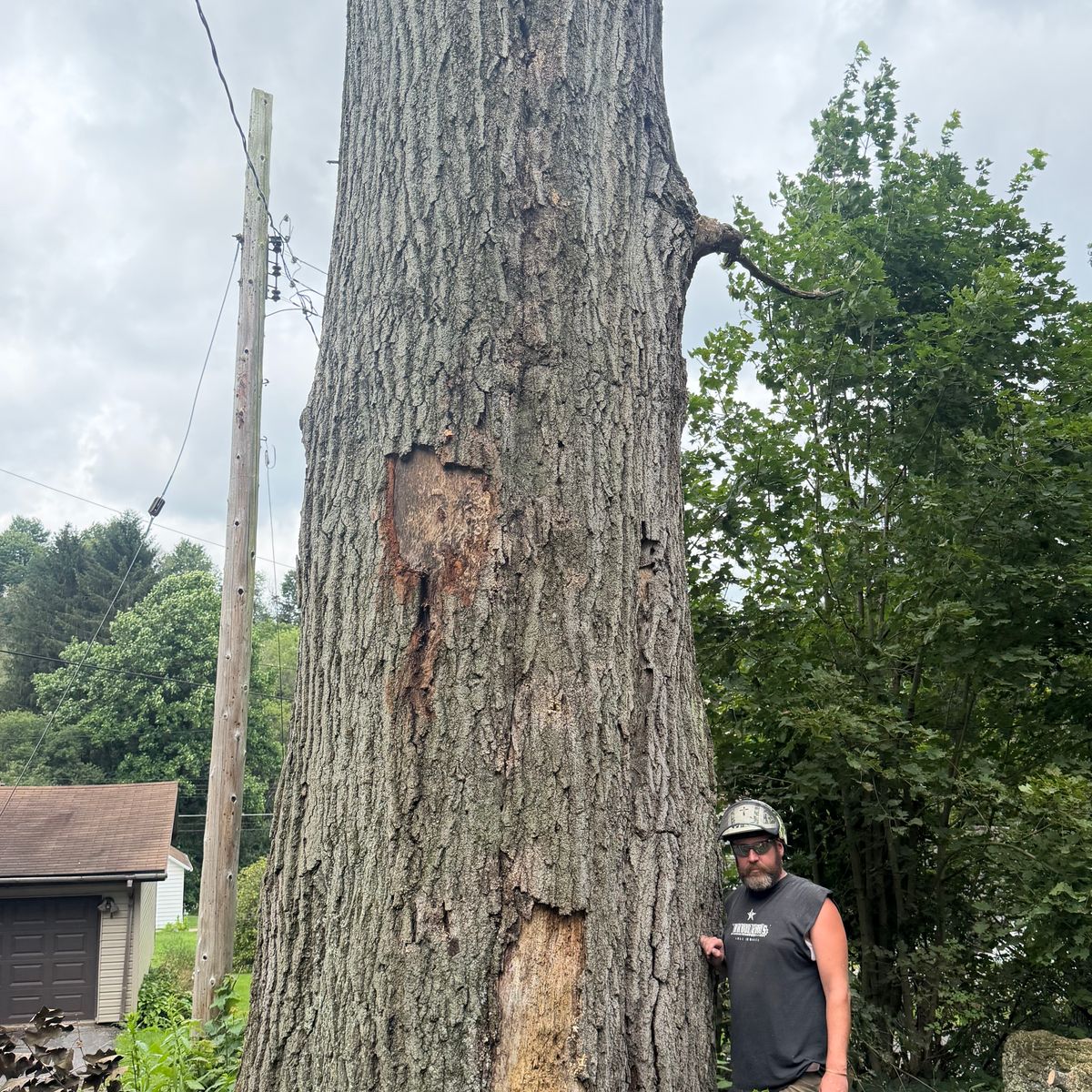
Vertical cracks, deep splits, or cavities in the trunk indicate structural weakness. A tree with a cracked trunk may look stable but can fail suddenly under wind, ice, or the weight of its own canopy. If you can see daylight through a trunk cavity, the tree’s structural integrity is compromised.
Included Bark and Split Forks
When two major trunks or limbs grow tightly together, they sometimes develop “included bark” — bark trapped between the stems instead of solid wood. This creates a weak union that is prone to splitting apart, especially in storms. Trees with a pronounced V-shaped fork at the top of the trunk are at higher risk.
Exposed or Damaged Roots
If you can see roots lifting out of the ground, or if construction, grading, or trenching has cut through major roots, the tree’s anchoring system may be compromised. Root damage often does not show symptoms in the canopy for months or even years, but it dramatically increases the risk of the entire tree falling over.
Leaning Trees
A tree that has always grown at an angle is not necessarily dangerous. But a tree that has recently started leaning — especially if you see soil heaving or cracking at the base — may be in the process of falling. Recent lean changes require immediate evaluation.
Fungal Growth and Decay
Mushrooms or conks (shelf fungi) growing on the trunk or at the base of a tree are signs of internal decay. The fungus is feeding on dead or dying wood inside the tree. By the time you see fruiting bodies on the outside, the internal damage may be extensive.
Trees Near Power Lines
Trees growing into or near power lines are dangerous for two reasons: they can cause power outages, and they can energize the ground around the tree. Never attempt to trim or remove a tree near power lines yourself. Our crews are EHAP-certified and trained to work safely near energized utility infrastructure.
Trees Near Structures
A healthy tree with a full canopy that overhangs your roof, garage, or deck may not seem like a hazard, but a single windstorm or ice event can turn it into one. If large branches extend over your home, a professional assessment can identify which limbs pose the greatest risk and whether pruning or removal is the better option.
When to Call a Professional
If you notice any of the conditions described above, or if a tree on your property just doesn’t look right to you, call for a professional evaluation. It’s always better to have a trained eye look at a tree before it fails than to deal with the aftermath. Arbor Pro’s provides free hazardous tree assessments across Clearfield County, Centre County, Jefferson County, and Elk County. We are fully insured and carry workers’ compensation coverage — critical when crews are working in and around compromised trees where the risk of injury is highest.
Schedule a free hazard assessment: call (814) 553-0303.