When Bark Falls Off in Sheets: What’s Happening Underneath
Here’s the thing about bark peeling off a tree: sometimes it is completely normal, and sometimes it means the tree is in serious trouble. The difference is species and pattern. A sycamore shedding bark in jigsaw-puzzle flakes every summer is healthy — that is just how sycamores grow. A red maple losing bark in large sheets from the lower trunk is a different story entirely. Knowing which pattern is which saves a lot of worry on one hand and catches real problems on the other.
The species that shed bark normally
Several common Central PA trees shed bark as part of their natural growth cycle. The inner bark is growing outward and the outer bark breaks away. This is healthy:
- Sycamore / London planetree. Sheds in irregular patches revealing white, green, and cream inner bark. The mottled look is the species’ signature. Completely normal year-round.
- River birch. Peels in thin papery curls, especially on younger trunks and branches. The salmon-to-cinnamon peeling bark is one of the main reasons people plant it.
- Shagbark hickory. Long vertical strips of bark curl away from the trunk. The name describes the look — shaggy plates that stay loosely attached. Normal and distinctive.
- Scotch pine. Sheds flaky orange-brown bark on the upper trunk and branches. The bright color underneath is normal.
If the species is a known shedder and the peeling follows the pattern described above, there is nothing to worry about.
When bark loss signals a problem
The warning signs are in the pattern. Bark loss is concerning when:
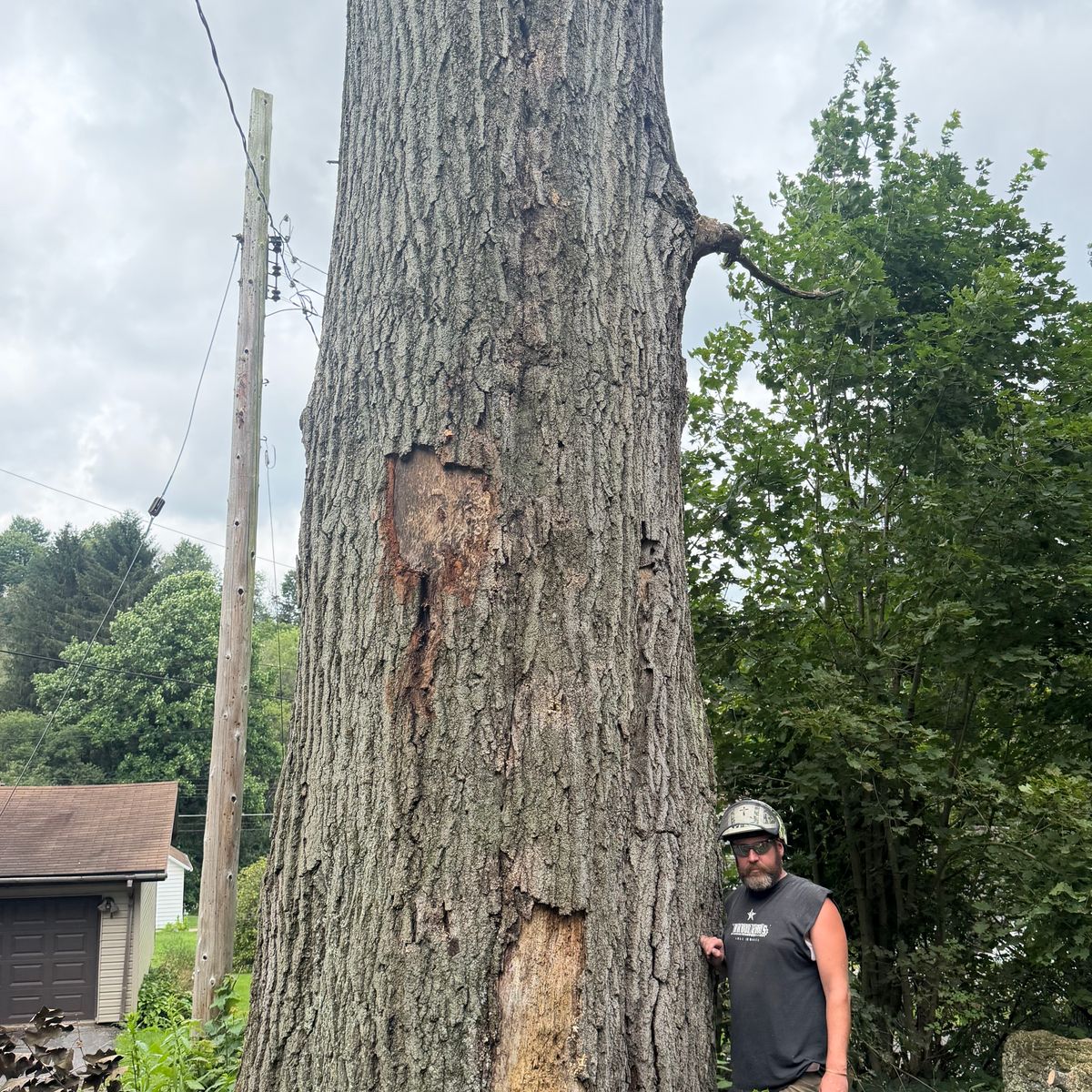
The species does not normally shed. Oak, maple, ash, walnut, and most fruit trees hold their bark tight. When bark separates from these species in large patches or sheets, the cambium layer underneath has died. That section of the trunk is no longer moving water or sugars. The USDA Forest Service Tree Owner’s Manual lists bark separation on non-shedding species as a late indicator of internal decline.
The exposed wood underneath is dry, cracked, or discolored. On a healthy bark-shedding species, the wood underneath is smooth and often brightly colored. On a declining tree, the exposed wood is brown, gray, dry, or fibrous. That color difference is diagnostic.
The bark comes away in large irregular sheets rather than small natural plates. Natural shedding produces consistent, species-typical patterns. Pathological bark loss produces large, irregular patches with ragged edges. The distinction is visual — one looks like the tree intended it, the other looks like something went wrong.
The bark loss is concentrated at the base of the trunk. Base-of-trunk bark loss often signals root collar decay — a fungal infection that attacks the junction between roots and trunk. Penn State Extension flags root collar decay as a structural concern because it compromises exactly the part of the tree that holds everything up.
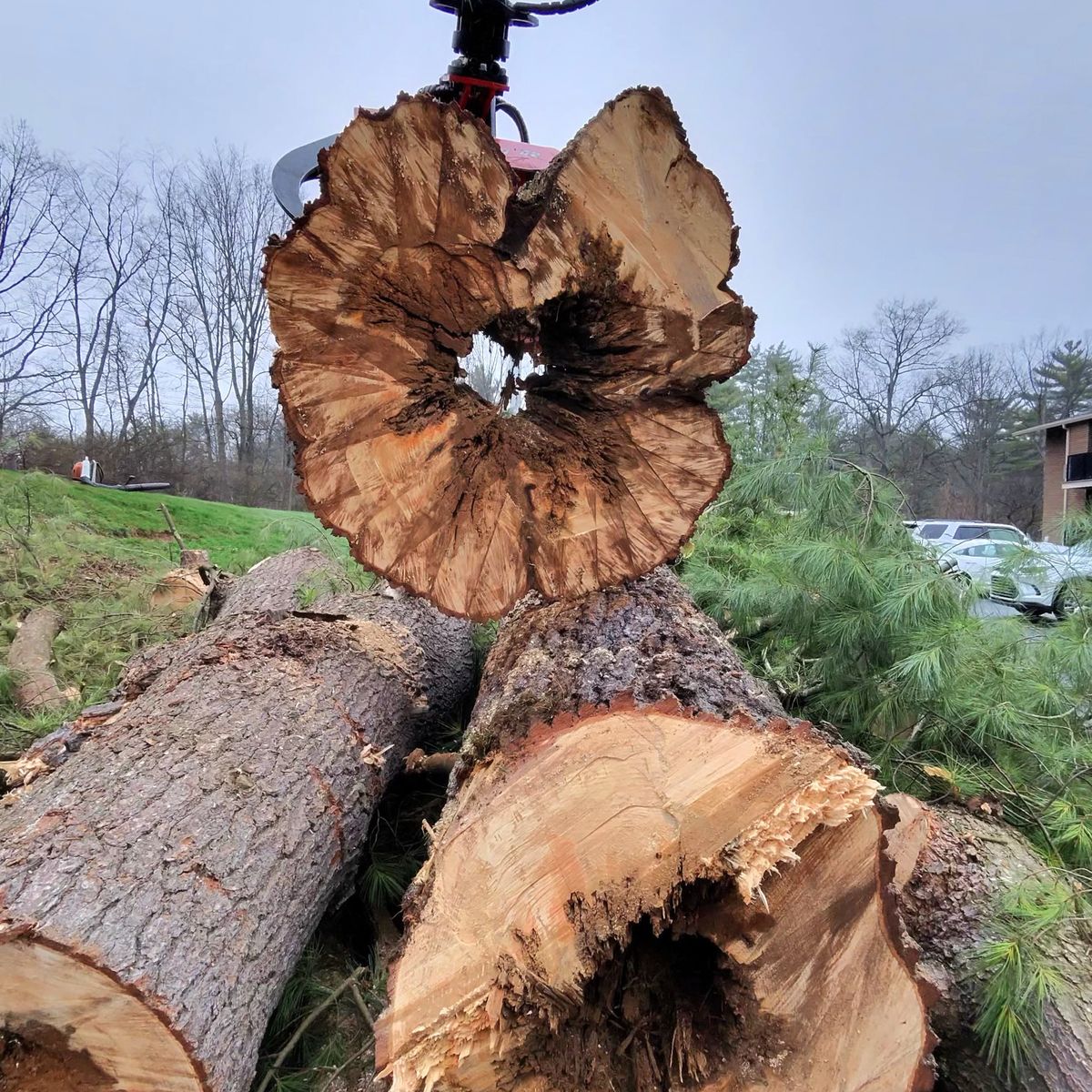
Bark is loose but still attached, with fungal fruiting bodies underneath. Lifting a loose bark plate and finding mushroom-like growth, white mycelial fans, or dark stringy material (rhizomorphs) underneath is a strong signal of active wood-decay fungus.
Sunscald — the winter bark crack
Central PA gets a specific bark damage pattern in winter called sunscald. On a cold clear day, the south or southwest side of a thin-barked tree trunk warms in direct sun, then re-freezes rapidly when the sun drops behind a ridge. The thermal shock kills the cambium in a vertical strip. The bark dries, cracks, and eventually falls away.
Species most vulnerable to sunscald in Central PA: young maples, cherries, lindens, and honeylocust. The damage often appears as a long vertical crack or depression on the southwest face of the trunk. Wrapping young tree trunks with commercial tree wrap from November through March prevents sunscald on vulnerable transplants.
Mechanical damage — mowers, weed whackers, deer rub
A strip of bark missing at the base of a lawn tree is almost always from a mower or string trimmer. A strip of bark torn off at two to four feet high on a young tree in a rural area is usually deer antler rub. Both exposures create entry points for decay fungi and borers. The fix is a mulch ring (mowers) or a tree guard (deer).
What to do
For any non-shedding species that is losing bark:
- Note the location and size of the bark loss. Bottom of the trunk, one side, all around — each tells a different story.
- Check what the wood looks like underneath. Bright and smooth = less concerning. Brown, dry, or fungal growth = urgent.
- Compare the bark loss to last year. If it is growing, the problem is progressing.
A tree health assessment can determine whether the bark loss is cosmetic, treatable, or structural. For properties in Centre County and the surrounding region, call (814) 553-0303. Arbor Pro’s Tree Service operates under PA Contractor License PA079160.