Tree Pruning Education
Proper pruning is one of the most important things you can do for the health, safety, and appearance of your trees. Done correctly, pruning promotes strong structure, removes hazards, and extends the life of the tree. Done incorrectly, it can cause permanent damage, invite disease, and create new hazards.
Why Pruning Matters
Pruning serves several critical purposes. It removes dead, dying, or diseased branches before they fall and cause injury or property damage. It eliminates crossing or rubbing branches that create wounds and entry points for decay. It improves the tree’s structure by removing weak or competing limbs, which reduces the risk of storm damage. It opens the canopy to allow more light and air circulation, promoting overall tree health. And it maintains clearance from structures, walkways, driveways, and utility lines.
When to Prune
The best time to prune most trees in Central Pennsylvania is during late winter or early spring, while the tree is still dormant. Pruning during dormancy reduces stress on the tree, minimizes sap loss, and makes it easier to see the branch structure without leaves. However, dead or hazardous branches should be removed at any time of year — do not wait for the “right season” to address a safety issue.
Avoid heavy pruning during late spring and summer when trees are actively growing and most vulnerable to stress and disease. Oaks in particular should never be pruned during the growing season due to the risk of oak wilt.
What Not to Do
Topping — cutting the main trunk or major branches back to stubs — is the single most damaging thing you can do to a tree. Topping destroys the tree’s natural shape, triggers a flush of weak, fast-growing shoots that are prone to failure, and creates large wounds that invite decay. A topped tree is weaker, uglier, and more dangerous than it was before.
Lion’s tailing — removing all interior branches and leaving foliage only at the ends of limbs — is another harmful practice. It shifts weight to the branch tips, increases wind resistance, and stresses the tree.
Wound Dressing Is Not Recommended
It was once common practice to paint tree wounds with tar or sealant after pruning. Research has shown that wound dressings do not prevent decay and can actually trap moisture, promoting fungal growth. A properly made pruning cut allows the tree to seal the wound naturally through compartmentalization. Leave the wound open and let the tree heal on its own.
When to Call a Professional
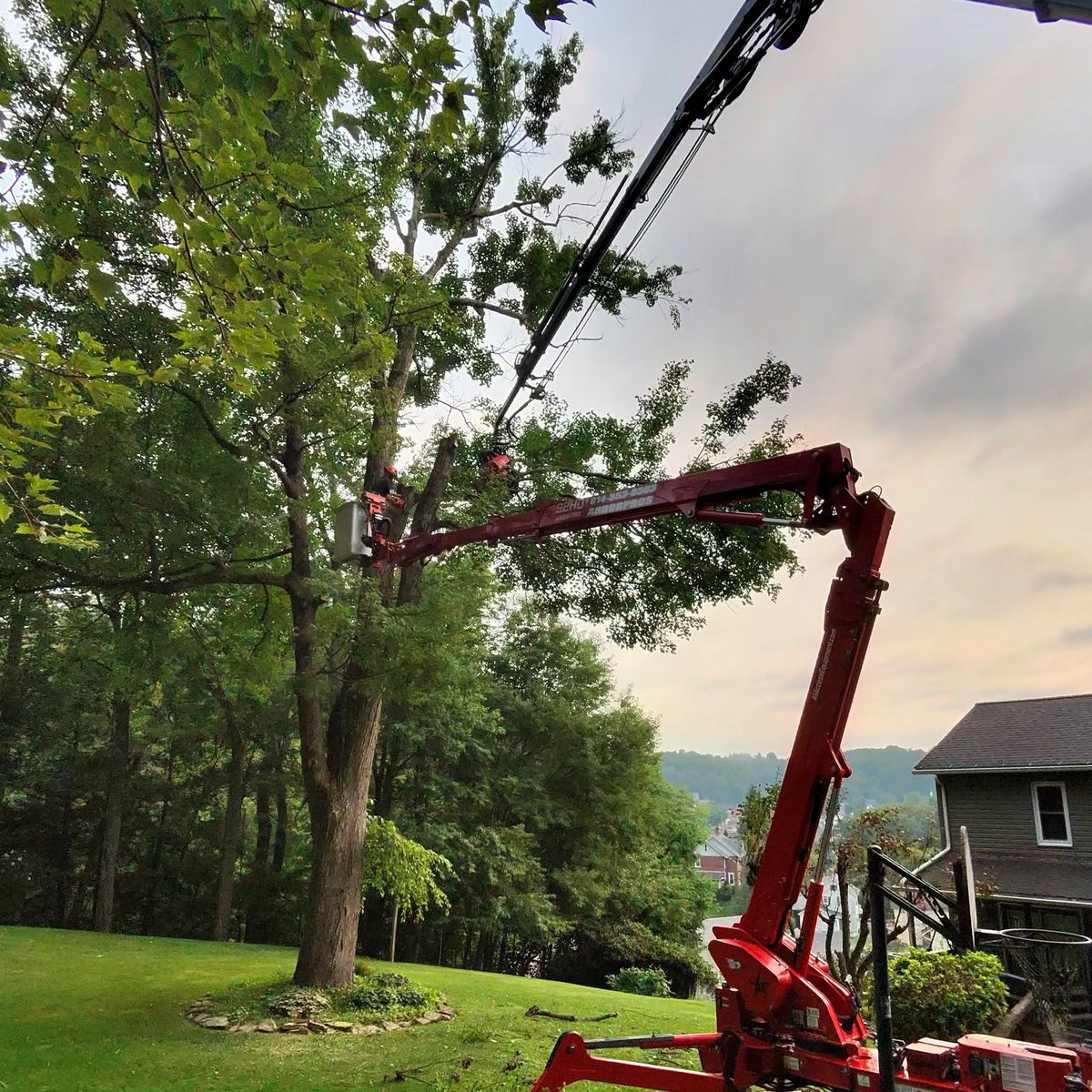
Homeowners can safely prune small branches that can be reached from the ground. Any pruning that requires a ladder, involves large branches, or is near power lines should be done by a professional tree service. Improper cuts on large branches can cause the limb to tear away from the trunk, stripping bark and creating a wound that may never heal properly.
Arbor Pro’s provides professional tree pruning and trimming services across Clearfield, Centre, Jefferson, and Elk Counties. Call (814) 553-0303 for a free estimate.