
Spotted Lanternfly in Central PA: What the 2024 Data Actually Shows
A recent look at Pennsylvania Department of Agriculture quarantine data shows spotted lanternfly is now established in the majority of Pennsylvania counties, with Centre, Blair, Huntingdon, and Clearfield among the Central PA counties added to the quarantine zone in the last two expansion rounds. The interesting part is not the spread itself. It was always going to spread. The interesting part is which trees on a Central PA property are actually at risk, which are not, and what the current research suggests the decision window looks like.
What the quarantine list actually means
A county being added to the PDA quarantine is an enforcement designation, not a prediction of tree death. It means the Department has confirmed reproducing populations and requires inspection compliance for businesses moving goods out of the area. For a homeowner, the practical signal is different: egg masses have been observed, adults have been photographed, and the invertebrate is using something in the area as a host. That something, in almost every confirmed case, is tree of heaven (Ailanthus altissima) — itself an invasive, not a native.
The research suggests a useful mental model. Spotted lanternfly preferentially feeds on tree of heaven for its reproductive cycle. Where tree of heaven is abundant, SLF populations build fast. Where it is removed or controlled, SLF populations drop sharply the following year. Penn State Extension’s homeowner guidance has reinforced this finding across multiple growing seasons.
Which trees on a Central PA property are actually at risk
The data on host preference is clearer than most homeowners realize. USDA APHIS documentation and Penn State Extension host lists show a pattern:
- Highest feeding pressure: tree of heaven, black walnut, silver and red maple, river birch, willow, and cultivated grapevine. In Centre and Blair County vineyards, economic loss in grapevine has been well-documented.
- Moderate feeding pressure: sugar maple, sycamore, tulip poplar, and several ornamental cherry species.
- Low feeding pressure or incidental only: oaks, hickories, conifers, most fruit-bearing apple and pear varieties.
Worth noting: feeding does not automatically equal death. Adult spotted lanternfly are phloem feeders — they weaken the tree, produce honeydew that promotes sooty mold, and stress the canopy, but a mature healthy oak or maple is rarely killed by SLF feeding alone. The trees most likely to actually decline are those already under stress — drought, compaction, prior storm damage, girdling roots — where SLF pressure pushes a marginal tree over the line.
The tree-of-heaven decision
The single highest-leverage action on a Central PA property with SLF pressure is not spraying. It is removing tree of heaven.
Tree of heaven is easy to identify and almost always misidentified. It looks like sumac at a glance. The distinguishing marks: smooth gray bark, long compound leaves with a gland at the base of each leaflet, and a strong peanut-butter smell when a leaf is crushed. It spreads aggressively from root suckers, which is why cutting it down without treatment usually produces more of it. A 2024 round of Penn State Extension guidance continues to recommend herbicide treatment of the standing tree first (to kill the root system), then removal several weeks later. Cutting first and treating suckers afterward is significantly less effective.
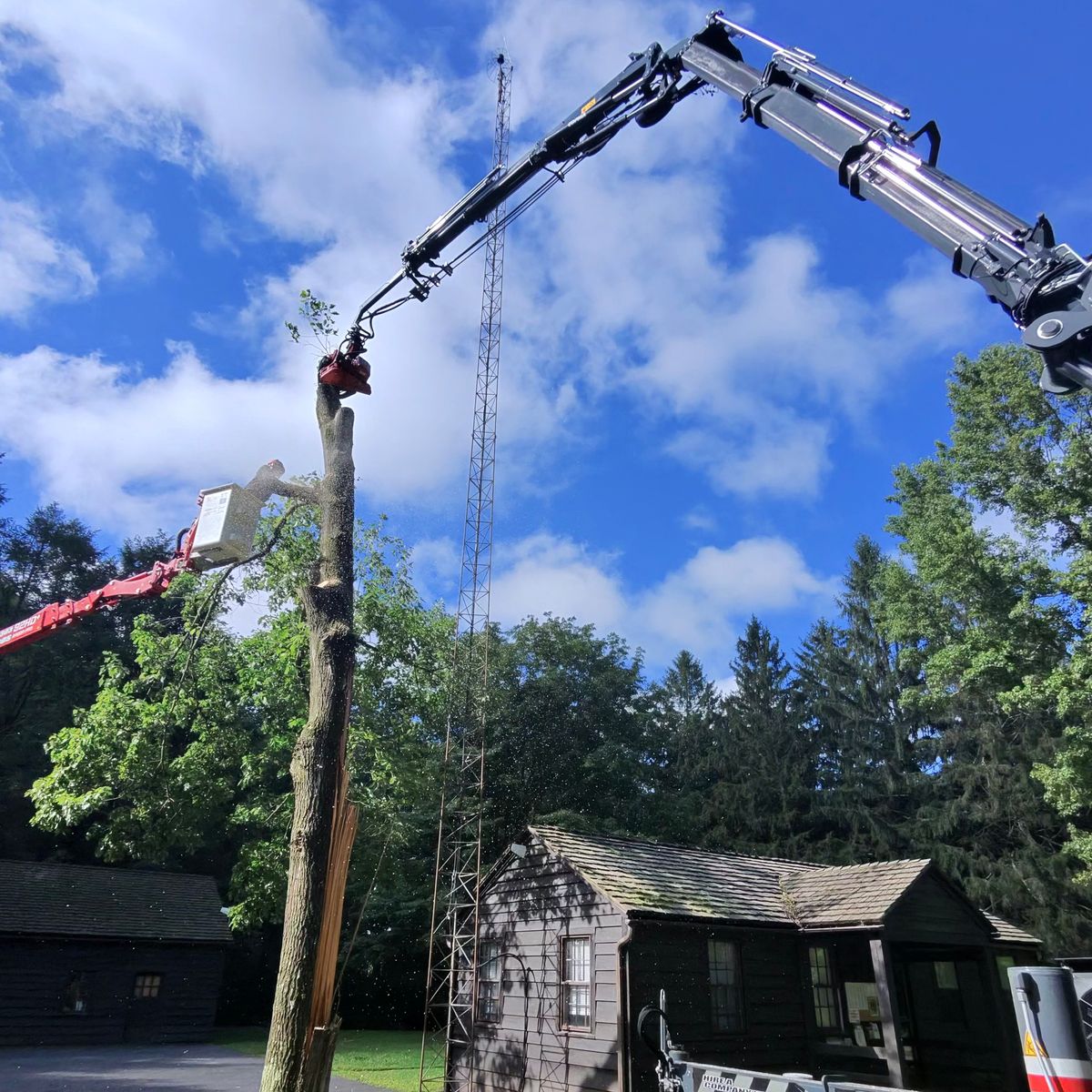
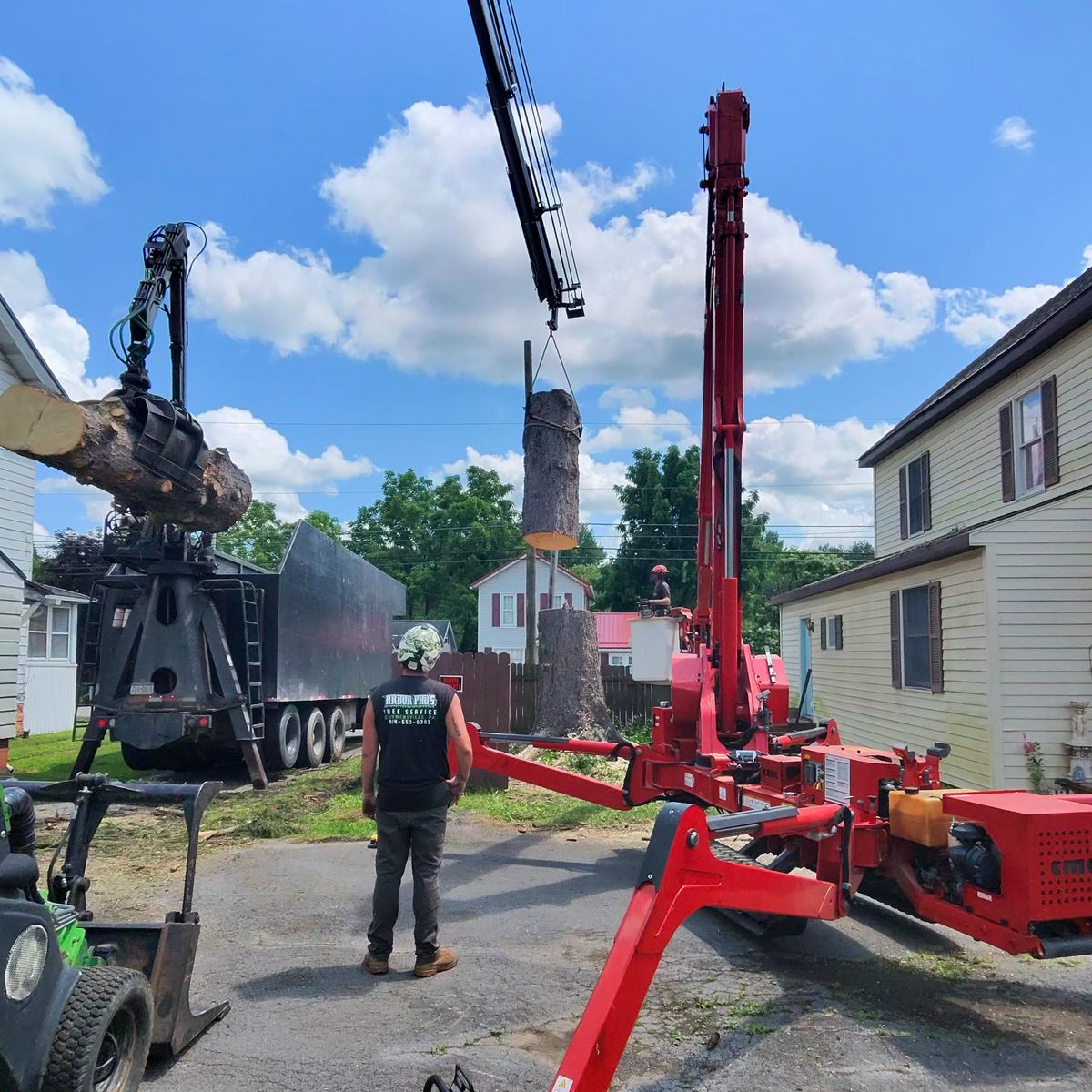
For properties with dense stands of tree of heaven along field edges, driveways, or right-of-ways, mechanical removal combined with the follow-up treatment is typically the right tool. Where the stand is too dense for selective cutting, forestry mulching on a controlled footprint can clear the stand in a single pass — though the follow-up herbicide step on regrowth still matters, because the seed bank and root system remain.
What the economic impact research says
Research out of Penn State’s College of Agricultural Sciences has estimated the potential economic impact of spotted lanternfly to Pennsylvania in the hundreds of millions of dollars annually if left uncontrolled, driven primarily by losses in the grape, hardwood, and ornamental nursery industries. One thing to flag from that work: the models that reach the highest loss numbers assume limited homeowner and landowner control action. In other words, the upper-bound projections are an argument for doing the tree-of-heaven removal work, not a reason to assume every hardwood on the property is doomed.
What to do this season
For a Central PA homeowner or land manager with SLF pressure on the property:
- Walk the property perimeter and identify any tree of heaven. The highest-impact action is removing those first, using the treat-then-remove sequence from Penn State Extension.
- Scrape or destroy egg masses between October and May. The eggs look like dried gray mud patches on tree bark, rocks, outdoor furniture, or vehicles.
- For mature hardwoods showing canopy dieback, request a tree health assessment before assuming SLF is the cause — drought stress, root compaction, or secondary pathogens are frequently the real driver.
- If removing multiple trees within the quarantine zone, work with a service that understands PDA movement-compliance rules. Arbor Pro’s Tree Service operates under PA Contractor License PA079160.
The data on spotted lanternfly in Central PA is clearer than the headlines suggest: a manageable invasive, a clear priority host, and a straightforward removal sequence that reduces the local population the next season. For properties in Centre County and the surrounding region, call (814) 553-0303 to schedule a tree-of-heaven assessment or a tree removal consultation.