Soil Compaction: The Invisible Reason a Healthy Tree Starts Dying
Here’s the thing about soil compaction: it does not look like tree damage. A compacted yard looks like a yard. The grass may be a little thin, the ground a little hard, but nothing about it screams “your tree is being slowly suffocated.” And yet, year after year, soil compaction quietly kills more mature trees in Central PA than any single pest or disease on the diagnostic lists. It is the most under-diagnosed cause of tree decline in residential yards. This post is the deep look at what is actually happening underground — and what to do about it.
What compaction actually means
Think of it like this: healthy soil is roughly half solids and half open space. The open space — the pores between soil particles — is where water, air, and fine roots live. A mature tree’s active feeder roots live almost entirely in the top 12 to 18 inches of soil, and those roots depend on that pore space for oxygen.
When pressure comes down on the soil — from vehicles, equipment, repeated foot traffic, livestock, or even just heavy construction staging — the soil particles compress. The pore spaces collapse. Water cannot infiltrate. Oxygen cannot diffuse. Fine roots die. USDA NRCS publishes soil compaction technical references that document this at a level most homeowners never see: compaction changes bulk density, hydraulic conductivity, and gas exchange all at once, and it can take years to reverse naturally.
The short version: compacted soil is dead soil from the tree’s point of view. The roots cannot breathe. They cannot drink. They die back.
Why the tree does not immediately look sick
Trees are extraordinary at masking stress. A mature shade tree has years of stored carbohydrate reserves. When feeder roots die from compaction, the tree does not immediately show it — the canopy pulls from reserves, leafs out looking fine, and continues to photosynthesize as best it can with a diminished root system.
What’s happening is that the tree is slowly going broke. Each year the canopy produces slightly less food than the year before. Each year the reserves are drawn down further. Then in year three or four or five, a drought or a cold snap or a secondary pest arrives, and the tree does not have the reserves to respond. That is the year the canopy thins visibly. That is the year everyone notices. By then the compaction has been doing the real work for half a decade.
The signs of compacted soil around a tree
Most people think compacted soil looks obvious. It doesn’t, usually. The useful signs to look for on a Central PA property:
- Water pooling on the surface after a normal rain. Healthy soil absorbs a one-inch rain event within an hour. Compacted soil sheets the water off or leaves puddles.
- Cracks opening in dry weather. Clay-heavy soils in Central PA crack when compacted and then dried — a mosaic pattern appears in the lawn in August.
- Grass that cannot stay green even when watered. The water is not reaching the root zone; it runs off.
- A hard, ringing sound when a soil probe is pushed in. Penn State Extension’s landscape care materials suggest a simple test: try pushing a long screwdriver into the soil at the drip line of a mature tree. If it goes in easily for a foot, the soil is probably okay. If it stops at three inches, compaction is likely.
- Surface roots appearing where they were not before. Roots will grow toward oxygen. When they cannot find it below, they come up.
The three common causes in Central PA yards
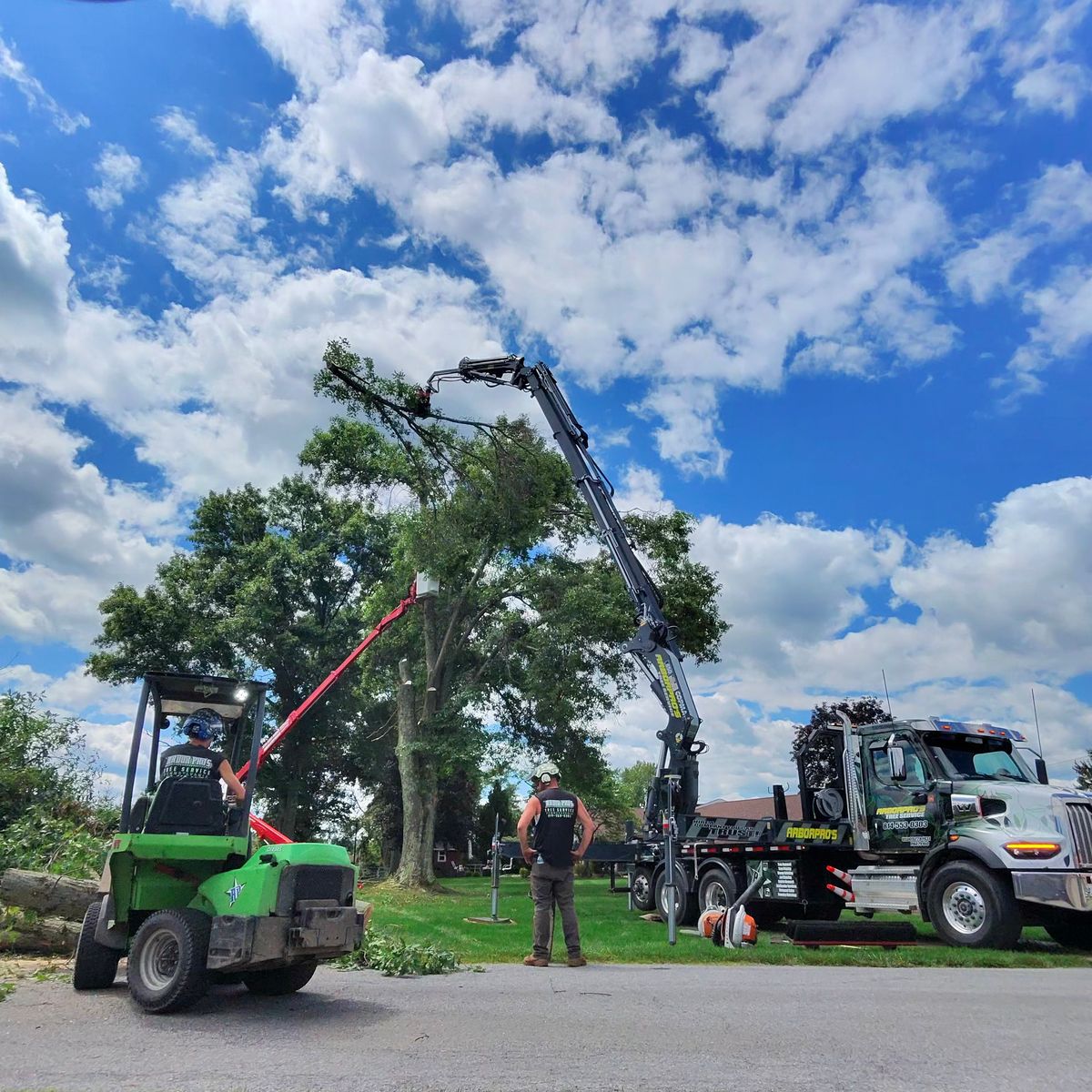
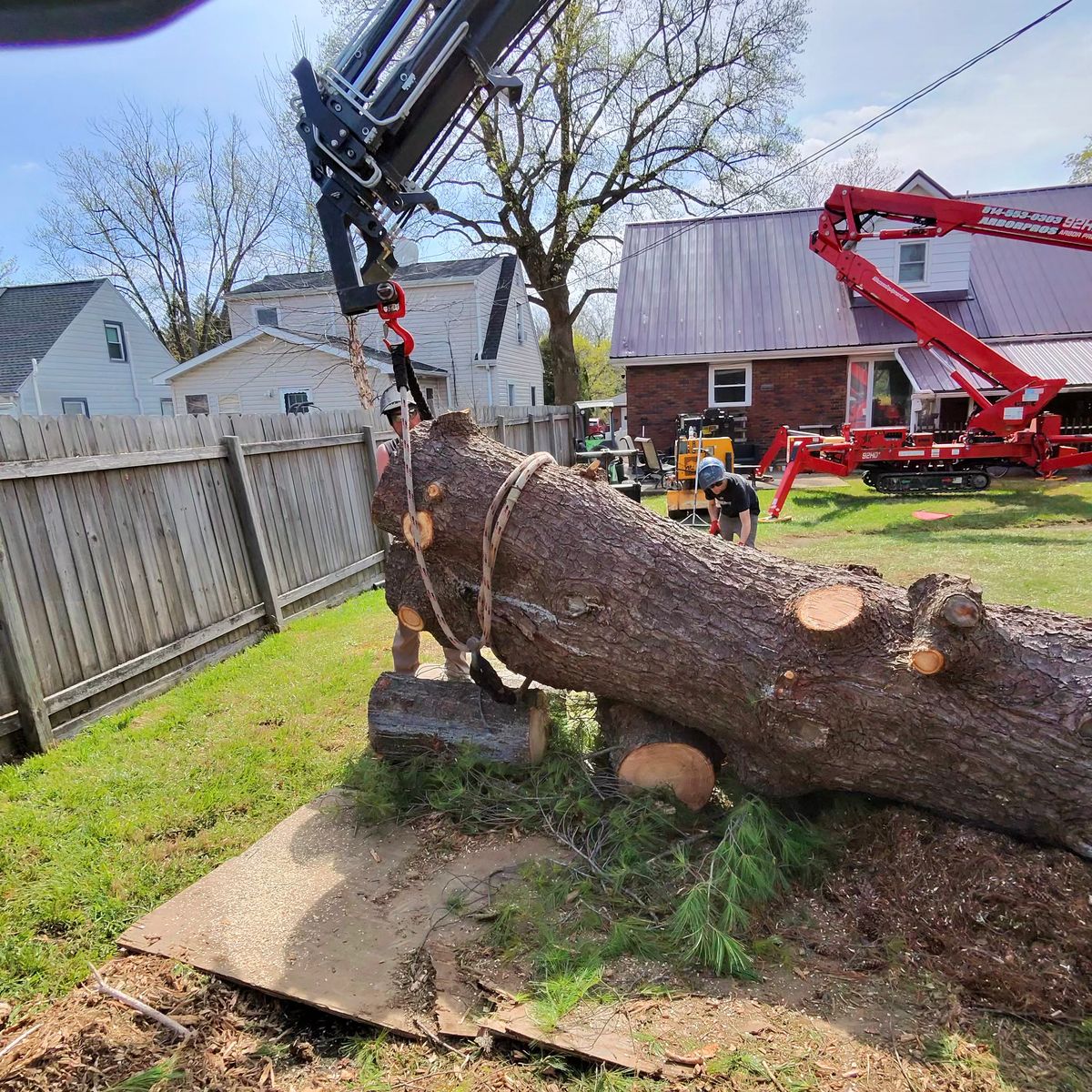
- Construction and renovation staging. The single worst compaction event most yards experience is a week of a bobcat, a mini-ex, or a dump truck parked in the root zone during a patio, addition, or landscape project. One season. Decades of damage.
- Routine mowing and foot traffic. On clay-heavy sites, a week of mowing the same path in wet spring conditions can compact the top four inches noticeably. Over years, it adds up.
- Parked vehicles in the yard. Even the occasional parked car, RV, or trailer across tree roots puts hundreds of pounds per square inch on the soil surface.
What actually works to fix it
Compaction remediation is slow but possible. The practical options:
- Radial trenching or air excavation. A specialized air tool (an air spade) blows soil out of narrow radial trenches from the trunk outward, then the trenches are backfilled with compost-amended soil. The USDA Forest Service and ISA both reference this as the gold-standard technique for decompacting around mature trees without damaging roots.
- Vertical mulching. Two-inch-diameter holes drilled in a grid pattern across the root zone, then filled with a coarse organic material. Less thorough than an air spade, but accessible to property owners in smaller situations.
- Deep-core aeration repeated over years. A commercial core aerator pulls plugs out of the soil; repeated annually, it slowly restores pore space.
- Organic mulch over the root zone, pulled back from the trunk. Mulch encourages earthworms and soil fauna, which do natural decompaction work for free.
What not to do
Tilling the root zone of a mature tree is worse than leaving the compaction in place. Tilling cuts feeder roots and accelerates decline. Rototillers have no business within the drip line of an established tree.
Compaction remediation work near large trees is judgment-sensitive — the wrong tool in the wrong spot does harm. A tree health assessment can map the actual root zone, identify where compaction is worst, and prescribe a remediation plan that fits the site.
For mature-tree compaction assessment across Centre County, Blair County, and the surrounding region, call (814) 553-0303. Arbor Pro’s Tree Service operates under PA Contractor License PA079160.